


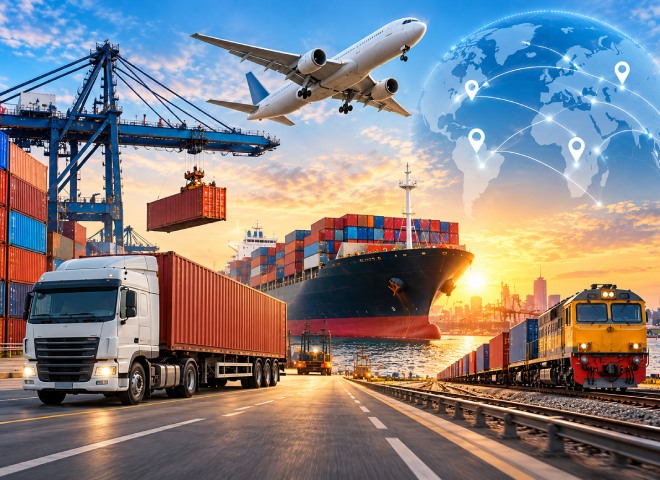
Transportation and logistics are essential to keeping businesses, supply chains, and global commerce moving. Every day, products and materials travel between suppliers, manufacturers, warehouses, businesses, and customers. Behind every successful delivery is a logistics process designed to move goods safely, efficiently, and on time.
Today, the transportation and logistics industry is changing rapidly. E-commerce growth, digital technology, rising transportation costs, fuel price fluctuations, driver shortages, and changing customer expectations are creating new challenges for businesses.
At the same time, modern technology is helping logistics companies improve shipment tracking, inventory management, transportation planning, communication, and overall supply chain efficiency.
For businesses that depend on reliable shipping, working with an experienced logistics company can make transportation easier, more efficient, and more predictable.
What Is Transportation and Logistics?
Transportation and logistics are closely connected, but they are not exactly the same.
Transportation focuses on physically moving goods from one location to another. This may include road transportation, ocean freight, air freight, rail transportation, or a combination of different methods.
Logistics involves managing the entire process surrounding the movement of goods. This can include planning, warehousing, packaging, inventory management, shipment tracking, documentation, transportation coordination, and delivery.
A well-managed logistics operation helps ensure that the right goods reach the right destination at the right time while keeping costs and delays under control.
Common transportation and logistics services include:
- Domestic transportation
- International shipping
- Freight transportation
- Freight forwarding
- Warehousing and storage
- Inventory management
- Shipment tracking
- Packaging and handling
- Supply chain coordination
- Import and export logistics
- Commercial goods transportation
- Domestic goods shipping
How E-Commerce Is Changing the Logistics Industry
The growth of e-commerce has dramatically changed customer expectations.
Consumers can now order products online from businesses located across the country or around the world. As a result, customers expect their orders to arrive quickly, safely, and with accurate tracking information.
For an online business, the customer experience does not end when an order is placed. The product still needs to be picked, packaged, transported, tracked, and delivered.
This makes transportation and logistics a critical part of e-commerce.
E-Commerce Logistics Requires More Than Fast Delivery
Modern e-commerce logistics involves several important processes, including:
- Order fulfillment
- Product packaging
- Inventory management
- Transportation planning
- Shipment tracking
- Last-mile delivery
- Returns and reverse logistics
- International shipping
A problem at any stage can lead to delivery delays, additional costs, or customer dissatisfaction.
For this reason, e-commerce businesses need logistics systems that can adapt to changing demand while maintaining reliable service.
The Role of Technology in Transportation and Logistics
Technology has become one of the most important tools for improving logistics operations.
Traditional processes that relied heavily on paperwork, phone calls, and manual data entry are increasingly being replaced or supported by digital systems.
Modern logistics technology can help businesses monitor shipments, manage inventory, analyze transportation data, and communicate more effectively with customers and partners.
Real-Time Shipment Tracking
Shipment tracking provides visibility throughout the transportation process.
Businesses can monitor shipment progress, while customers can receive updates about their orders. Better visibility also makes it easier to identify potential delays and respond before they become larger problems.
Digital Inventory Management
Accurate inventory information is essential for efficient logistics.
Businesses need to know what products are in stock, what has already been shipped, and what inventory is currently in transit.
Digital inventory systems can help reduce errors and provide a clearer view of inventory across different locations.
Transportation Management
Transportation management systems can help companies plan routes, coordinate shipments, manage carriers, and monitor transportation costs.
Better planning can reduce unnecessary mileage, improve delivery schedules, and increase overall efficiency.
Data and Demand Forecasting
Data can help logistics companies understand changing customer demand.
Historical shipping information, seasonal trends, geographic demand, and market conditions can be used to estimate future transportation and inventory requirements.
This allows businesses to prepare for changes instead of simply reacting to them.
Major Challenges in Transportation and Logistics
The logistics industry faces several challenges that can affect costs, delivery times, and customer satisfaction.
Some of the most common challenges include:
- Driver shortages
- Fuel price fluctuations
- Rising transportation costs
- Changing customer demand
- Capacity planning problems
- Poor inventory visibility
- Inaccurate information
- Delivery delays
- Supply chain disruptions
- Complex international shipping requirements
Understanding these challenges is the first step toward developing better logistics solutions.
1. Capacity Forecasting
Capacity forecasting is an important part of transportation planning.
Businesses need to estimate how much transportation, warehouse space, labor, and other resources they will need in the future.
If a company underestimates demand, it may not have enough transportation capacity to handle shipments. This can result in delays and higher costs.
On the other hand, overestimating demand can lead to unused transportation or warehouse capacity.
Effective forecasting can consider:
- Historical demand
- Seasonal patterns
- Customer behavior
- Geographic demand
- Product volume
- Market trends
- Promotional activity
- Transportation availability
Using accurate information allows businesses to make more informed decisions about future capacity.
2. Inventory Management
Inventory management is another major component of logistics.
A business needs to know where its products are and how much inventory is available at any given time.
Poor inventory management can result in:
- Stock shortages
- Excess inventory
- Higher storage costs
- Delayed customer orders
- Inefficient transportation
- Lost sales
Connecting inventory information with transportation and warehouse operations can provide businesses with greater supply chain visibility.
3. Information Sharing
Accurate information is essential throughout the supply chain.
Suppliers, logistics companies, warehouses, retailers, and customers may all need access to shipment and inventory information.
When information is outdated or inaccurate, it becomes more difficult to respond to delays, inventory shortages, or other transportation problems.
Effective communication can improve:
- Shipment visibility
- Delivery planning
- Inventory management
- Customer service
- Risk management
- Supply chain coordination
Digital systems can make it easier for businesses and logistics providers to share important information.
Domestic and International Logistics
Businesses may require transportation services within their own country or across international borders.
Domestic transportation generally involves moving goods between suppliers, warehouses, businesses, retailers, and customers within the same country.
International transportation can involve additional requirements and greater complexity.
Depending on the shipment and destination, international logistics may involve:
- Ocean freight
- Air freight
- Road transportation
- Customs clearance
- Import and export documentation
- International regulations
- Port operations
- Border procedures
- Shipment tracking
An experienced logistics provider can help coordinate these processes and reduce the complexity involved in moving goods internationally.
How Businesses Can Improve Logistics Efficiency
Improving transportation and logistics does not always require completely changing an existing operation. Small improvements in planning, technology, communication, and inventory management can make a significant difference.
Improve Shipment Visibility
Give customers and business partners access to accurate shipment information whenever possible. Better visibility can reduce uncertainty and make it easier to manage delays.
Optimize Transportation Routes
Efficient route planning can help reduce travel distance, fuel consumption, delivery times, and unnecessary transportation costs.
Maintain Accurate Inventory Records
Businesses should regularly update inventory information and maintain visibility into goods that are currently in transit.
Use Data to Make Decisions
Transportation and inventory decisions should be based on reliable data whenever possible. Analyzing previous shipments and customer demand can help businesses identify patterns and improve future planning.
Improve Communication
Clear communication between suppliers, logistics providers, warehouses, and customers can prevent misunderstandings and help resolve problems faster.
Why Choose a Professional Transportation and Logistics Company?
Managing transportation internally can become increasingly difficult as a business grows.
A professional logistics company can provide the experience, resources, and coordination needed to manage different stages of the shipping process.
The right logistics provider can help businesses:
- Coordinate transportation
- Manage shipments
- Improve delivery visibility
- Reduce unnecessary delays
- Handle logistics documentation
- Coordinate domestic and international shipments
- Improve supply chain efficiency
- Manage commercial and domestic goods
Before choosing a logistics provider, businesses should consider its experience, service coverage, communication, reliability, tracking capabilities, and ability to handle their specific shipping requirements.
The Future of Transportation and Logistics
The future of transportation and logistics will continue to be shaped by technology and changing customer expectations.
Businesses are increasingly looking for logistics solutions that provide greater visibility, faster communication, better forecasting, and more efficient transportation.
Some of the key areas shaping the future include:
- Real-time shipment visibility
- Digital inventory management
- Automated logistics processes
- Data-driven forecasting
- Route optimization
- Digital documentation
- Supply chain visibility
- Faster fulfillment
- More efficient transportation
- Improved customer communication
Companies that invest in better technology and continuously improve their logistics processes will be better prepared to respond to changing market conditions.
Frequently Asked Questions
What does transportation and logistics mean?
Transportation refers to moving goods from one location to another, while logistics covers the planning and management of activities involved in storing, handling, tracking, and delivering those goods.
Why is transportation important in logistics?
Transportation connects different parts of the supply chain. It allows products and materials to move between suppliers, warehouses, businesses, and customers.
What are the biggest transportation and logistics challenges?
Common challenges include fuel costs, driver shortages, changing customer demand, capacity planning, inventory accuracy, delivery delays, and supply chain disruptions.
How does technology improve logistics?
Technology can improve shipment tracking, inventory visibility, transportation planning, demand forecasting, documentation, communication, and operational efficiency.
What is logistics forecasting?
Logistics forecasting uses historical information, current inventory, market trends, customer demand, and other data to estimate future transportation and supply chain requirements.
What is the difference between domestic and international logistics?
Domestic logistics involves transporting goods within a country. International logistics involves cross-border transportation and may require customs procedures, import and export documentation, and additional regulatory requirements.
How can a logistics company help my business?
A logistics company can help coordinate transportation, shipping, warehousing, tracking, documentation, and other supply chain activities, allowing businesses to focus more on their core operations.
Conclusion
Transportation and logistics are fundamental to modern business. As e-commerce continues to grow and supply chains become more complex, businesses need reliable ways to move goods while controlling costs and maintaining customer satisfaction.
Challenges such as capacity forecasting, inventory management, fuel price changes, driver shortages, and inaccurate information can affect the efficiency of a logistics operation. However, technology, accurate data, better planning, and effective communication can help businesses overcome many of these challenges.
At Pakchina Logistics, we understand the importance of reliable transportation and logistics. We provide solutions for businesses and individuals looking to move commercial and domestic goods across the world.
Whether you need help with international shipping, freight transportation, or other logistics requirements, our team can help you identify a practical shipping solution based on your shipment, destination, timing, and requirements.
Contact Pakchina Logistics today to discuss your transportation and logistics needs and learn how we can help simplify your shipping process.